How Engineers Source Legacy Omron Automation Components to Keep Production Running
Many industrial systems still depend on proven automation hardware that manufacturers no longer produce. When critical components fail, finding reliable replacements can be difficult. This guide explains why discontinued Omron servo drives and automation components remain essential for maintaining existing machinery. It also explores how engineers and maintenance teams source legacy parts to reduce downtime, preserve system continuity, and extend the operational life of established production equipment.
Specialist Supply of Discontinued Omron Servo Drives & Industrial Parts in the UK
For engineers, automation specialists, and robotics professionals who rely on proven control systems, sourcing legacy components can be a serious challenge. Industrial machinery is often designed to run for decades, but manufacturers regularly phase out certain product lines as technology evolves.
As a result, when a component fails, replacement options may appear limited. Many companies face the difficult choice between redesigning entire automation systems or locating reliable replacement parts.
This is where specialist suppliers become important. Companies like K2 Automation help engineers access discontinued Omron servo drives, safety automation products, and industrial control equipment that are no longer available directly from the manufacturer.
These components are often essential for maintaining system continuity, supporting machine repairs, and extending the operational life of existing production equipment. Instead of replacing entire systems, engineers can keep proven machinery running with the correct replacement parts.
What Are Omron Automation and Safety Components?
Omron is widely recognised as one of the global leaders in industrial automation, motion control technology, and safety engineering. Since its founding in 1933, the company has developed a broad portfolio of automation solutions used across manufacturing, robotics, and advanced production environments.
Its technologies support key industrial functions including:
- Motion control systems
- Robotics integration
- Programmable logic controllers (PLCs)
- Safety automation modules
- Human-machine interface systems
- Industrial control hardware
Over the years, Omron servo drives and automation modules have been installed in thousands of manufacturing facilities worldwide.
However, as technology progresses, manufacturers eventually discontinue older product lines to focus on newer platforms that offer improved performance and long-term support.
Despite this, many production facilities still rely on these legacy systems. In many cases, replacing the entire automation architecture would be costly, disruptive, and unnecessary if a simple component replacement can restore functionality.
This ongoing demand explains why discontinued Omron automation components remain valuable within modern industrial environments.
Why Legacy Omron Components Are Still in Demand
Even when newer technologies exist, older automation components often continue to perform reliably. For many organisations, maintaining existing systems is a more practical option than implementing full upgrades.
Engineers and automation specialists typically seek discontinued Omron components for several key reasons.
Direct Replacement Parts
When a servo drive or control module fails, replacing it with the exact same model ensures compatibility with existing systems. This approach avoids complex reprogramming or integration issues.
System Continuity
Maintaining established PLC configurations, motion control settings, and safety architectures allows production lines to continue operating without major disruption.
Legacy Equipment Support
Many industrial machines are built to operate for decades. Access to legacy automation components helps ensure these machines remain serviceable.
Minimal Downtime
Production interruptions can have significant operational and financial consequences. Sourcing the correct replacement component quickly helps reduce downtime and restore operations.
Cost-Effective Machine Life Extension
Replacing a single control component is often far more economical than redesigning or replacing entire automation systems.
Because of these factors, many engineering teams actively search for suppliers capable of providing discontinued Omron parts when needed.
Key Benefits for Engineers and Automation Specialists
For maintenance teams and automation engineers, reliable access to discontinued parts can significantly simplify operational challenges.
Several important advantages make legacy component sourcing a practical solution.
Maintain System Continuity Without Full Upgrades
Replacing a failed servo drive does not necessarily justify a complete system overhaul. By installing the same Omron model originally used within the system, engineers can preserve existing configurations and avoid complex redesign work.
Reduce Downtime in Critical Operations
In manufacturing environments, even short production delays can affect schedules and supply chains. Fast access to discontinued automation components helps maintenance teams restore systems quickly.
Extend the Life of Proven Machinery
Many Omron automation components were designed for long-term industrial use. If machinery continues to perform reliably, maintaining the original system architecture can be the most efficient approach.
Preserve Safety Compliance
Industrial safety systems often rely on specific hardware configurations. Direct component replacement helps preserve validated safety frameworks and existing compliance documentation.
Avoid Expensive System Redesign
Upgrading to a new automation platform may involve:
- Control system redesign
- Software reprogramming
- Integration testing
- Staff retraining
Sourcing legacy components can help organisations avoid these additional costs.
Features and Technical Specifications
Discontinued Omron automation parts can include a wide variety of components depending on system requirements and availability.
Common product categories may include:
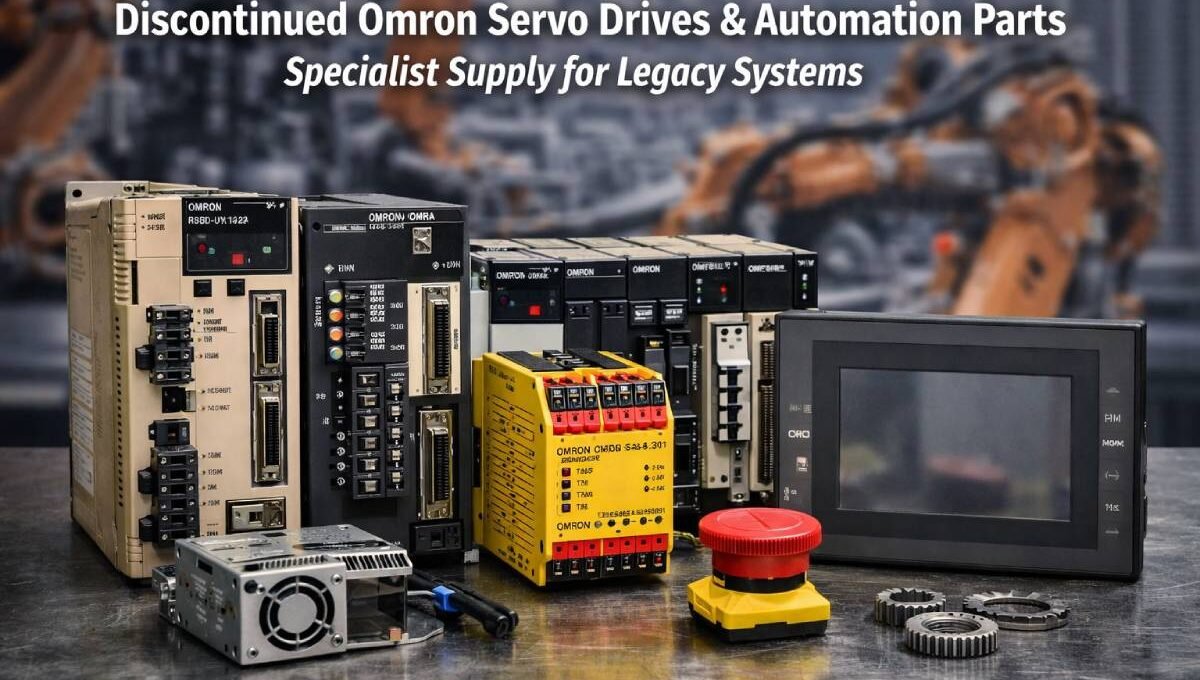
- Omron servo drives from legacy series
- Motion control units
- PLC modules
- Industrial safety relays and controllers
- HMI and interface components
- Automation power supplies
- I/O expansion modules
Because these components were originally designed for industrial environments, they often provide robust technical performance.
Typical specifications (depending on the model) may include:
- Industrial-grade housing designed for factory environments
- Voltage compatibility across common industrial ranges (200V–400V)
- Encoder feedback capability for precise motion control
- High-precision positioning performance
- Integrated safety functionality in certain models
- CE certification based on original manufacturing standards
Before dispatch, components are typically inspected and verified to confirm authenticity and correct model identification. Where available, documentation and compatibility guidance may also be provided to assist engineers with installation and system integration.
Why Engineers Choose Specialist Automation Suppliers
Sourcing discontinued automation parts often requires specialist industry knowledge. General distributors may not carry obsolete equipment, making dedicated suppliers particularly valuable.
Several factors explain why engineers frequently work with automation specialists.
Access to End-of-Life Stock
Many discontinued Omron components are no longer available through official manufacturer distribution channels. Specialist suppliers maintain inventories of legacy hardware that engineers can still access.
Automation System Expertise
Suppliers focused on automation technology understand how servo drives, PLCs, and safety systems integrate within industrial machinery. This knowledge helps ensure the correct parts are identified and supplied.
Quality Assurance and Verification
Authenticity and reliability are critical when sourcing legacy equipment. Inspection and verification processes help ensure parts meet operational expectations.
Responsive UK-Based Support
Engineering downtime often requires rapid decision-making. Access to knowledgeable support teams can help engineers confirm part availability and compatibility quickly.
Trusted by Industry Professionals
Discontinued automation components are frequently sourced by organisations across sectors such as:
- Automotive manufacturing
- Food and beverage production
- Packaging systems
- Robotics and motion control engineering
- Advanced manufacturing facilities
These industries rely on stable automation systems to maintain production efficiency.
Where Omron Servo Drives and Safety Components Are Used
Omron automation products support a wide range of industrial applications. Their reliability and precision make them suitable for many types of machinery and manufacturing systems.
Manufacturing and Production Lines
Servo drives are essential for controlling motors within conveyor systems, assembly lines, and packaging machinery. Precise motion control helps maintain consistent production quality.
Robotics and Motion Control Applications
Industrial robots, CNC machines, and automated positioning systems rely on accurate drive technology to perform precise and repeatable movements.
Safety Automation Systems
Safety relays and controllers help protect operators and equipment by supporting emergency stop circuits, machine guarding, and regulatory compliance frameworks.
OEM Equipment Support
Original equipment manufacturers often design machinery around specific automation components. Maintaining these systems frequently requires exact replacement parts to preserve system integrity.
Conclusion
Industrial automation systems are often designed for long-term reliability, which means legacy components can remain essential long after manufacturers discontinue them. For many organisations, replacing entire automation platforms simply because one component fails is neither practical nor cost-effective.
Access to discontinued Omron servo drives and automation components allows engineers to maintain system continuity, reduce downtime, and extend the life of proven machinery. By sourcing reliable legacy parts from specialist suppliers, maintenance teams can keep production systems operating smoothly while avoiding unnecessary system redesigns.